Quarterback (2): Joe Burrow and Joe Flacco
Running back (3): Chase Brown, Samaje Perine and Tahj Brooks
Wide receiver (7): Ja’Marr Chase, Tee Higgins, Andrei Iosivas, Dohnte Meyers, Colbie Young, Mitchell Tinsley, Ke’Shawn Williams
Tight end (4): Mike Gesicki, Drew Sample, Erick All and Tanner Hudson
Offensive line (9): Orlando Brown Jr., Dylan Fairchild, Ted Karras, Dalton Risner, Amarius Mims, Jalen Rivers, Connor Lew, Brian Parker, Javon Foster
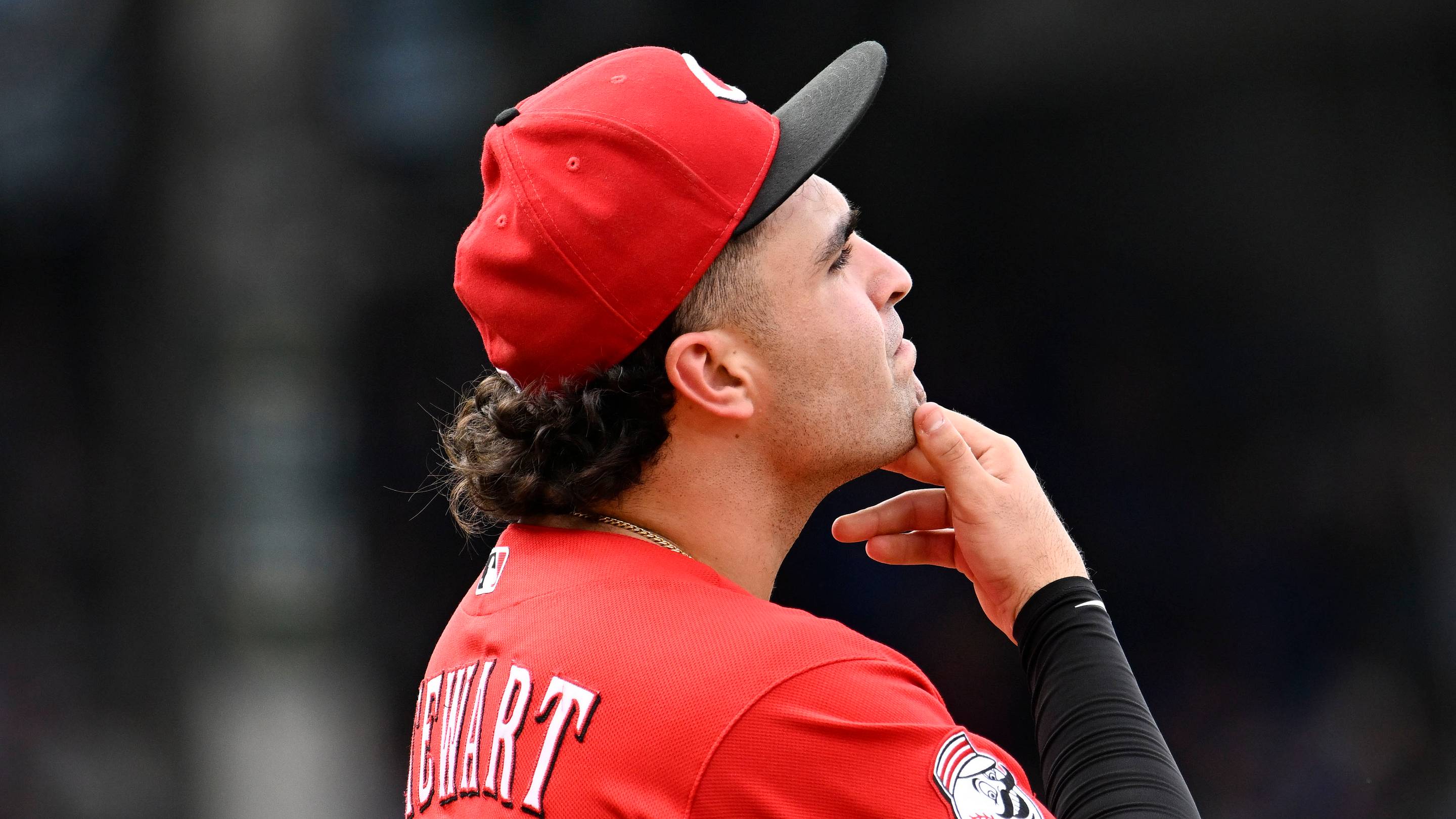
Defensive line (10): Myles Murphy, Dexter Lawrence, Jonathan Allen, Boye Mafe, BJ Hill, TJ Slaton, Kris Jenkins, Shemar Stewart*, Cashius Howell, Cedric Johnson
Linebacker (5): Barrett Carter, Demetrius Knight, Oren Burks, Swayze Bozeman, Shaka Heyward
Cornerback (6): DJ Turner, Dax Hill, Jalen Davis, DJ Ivey, Tacario Davis, Ja’Sir Taylor
Safeties (4): Bryan Cook, Jordan Battle, Kyle Dugger, PJ Jules
Specialists (3): Evan McPherson, Ryan Rehkow, William Wagner
Outside looking in: Josh Johnson, Charlie Jones, Jack Endries, Jacob Bayer, McKinnley Jackson, Landon Robinson, Joe Giles-Harris, Josh Newton, Daijahn Anthony
I’m at 47 locks.
There are four positions that I view being filled internal option or an outside addition: RB3, OT9 (tackle specific), LB5 (Heyward or Giles-Harris) and the fourth safety.
A roster spot would open up if Stewart opens the year on IR and misses the first month of the season. Right now, we don’t have any information on his timeline.
That leaves two flex spots that could be anything from sixth/seventh receivers (specifically a returner), a tenth offensive lineman, Robinson, seventh corner or Josh Johnson.
Right now, I’m going with a receiver in Tinsley and a returner (also a receiver) in Ke’Shawn Williams. The projection would be subject to change based on what’s available at offensive line on the waiver wire.
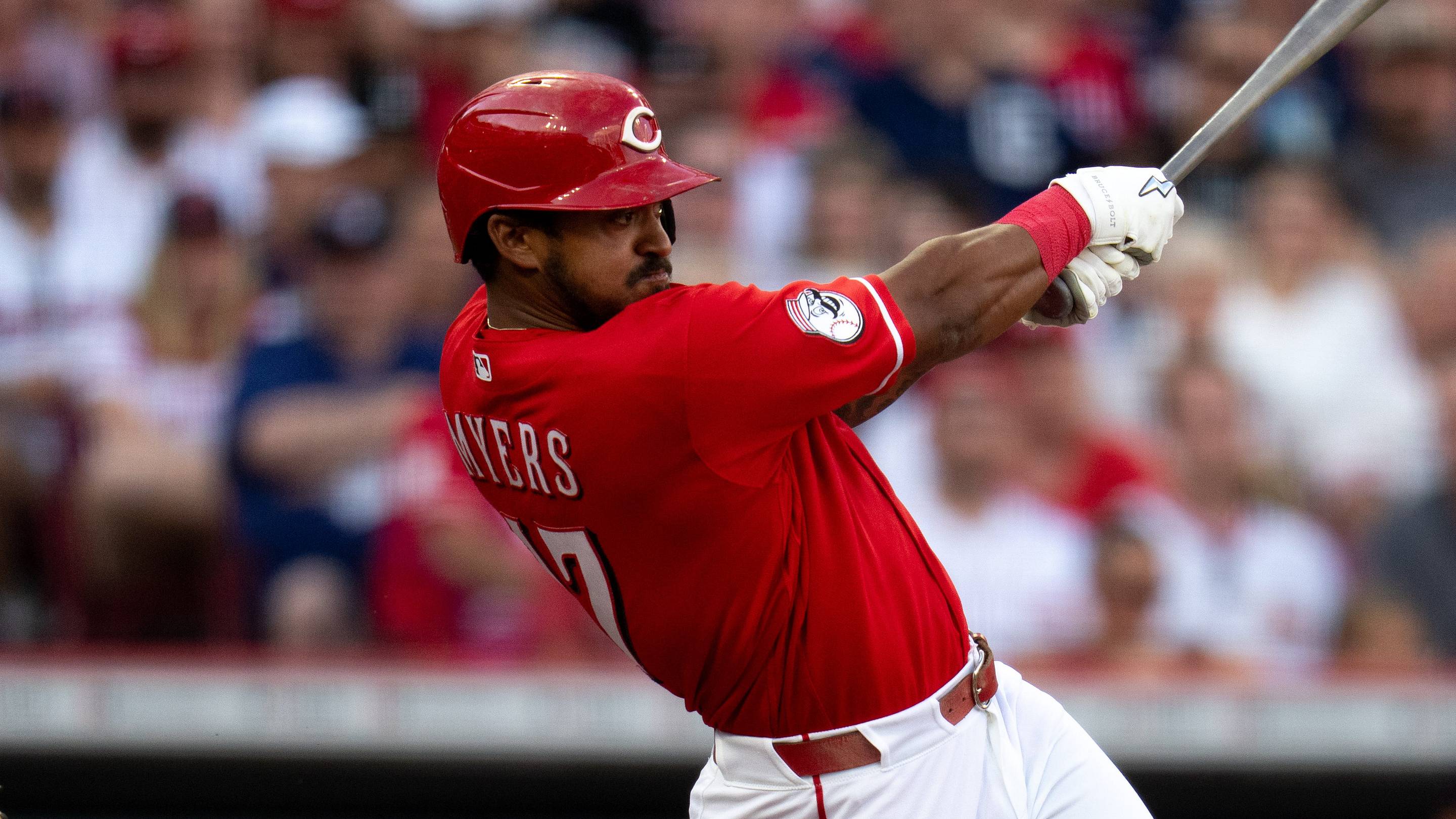
Meyers is on this team. You don’t need me to explain why. Just look at the way Johnson has fed him all preseason. These are literally valuable reps for Johnson that will shape how much longer he gets to play. He put his career in Meyers’ hands, and Meyers delivered like he has all preseason.
There has been a notable change in the receiver room even over the last two weeks. What if Meyers isn’t competing for the final spot in the room? What if he’s WR4 or 5? What if he doesn’t need to be the returner to be on the active game day roster?
It seemed very notable that Meyers was not used as a returner on Friday. It looks possible that he might just stick on this roster based on his merits at his receiver alone.
The stats aren’t out yet for the preseason finale, but 27 out of Meyers’ 44 snaps in the first two weeks of the preseason were in the slot. He’s not the physical one-on-one winner down the field that Andrei Iosivas is, but Meyers can take the top off a defense, is great on routes that get him the ball in space with room to run as well as outs toward the sideline where he spins back around. He can help what’s already the best receiver room in the NFL.
Without Meyers returning kicks and punts, the Bengals would need to keep one of Jones or Williams (who split the punt return reps on Friday). Since this would be a seventh receiver who you wouldn’t expect much on offense anyway, I went with the better pure returner in Williams. While Jones has more straight line speed that results in touchdowns, Williams’ ability to change directions makes him tougher to tackle.
Williams takes one of the flex spots.
The other came down to Tinsley, Endries, Bayer and Robinson for me.
Tinsley looks like the player who’d be set up to help the Bengals the most in the short term.
Since Meyers has mostly been playing the slot, Tinsley gives the Bengals a different look with his versatility as well as his ability to block. Troy Walters has called him a “safety blanket” for a coach. Tinsley a dynamic presence on contested catches as well as a consistent piece on special teams, where Colbie Young has much less of a track record.
The question would probably come down to how ready Young would be for all of the nuances of this role in the Bengals’ offense and on special teams.
Also, Tinsley can play. If all of these guys on the roster bubble were draft picks, I’d draft Tinsley for 2026 ahead of Endries, Bayer and Robinson.
The 2020 Bengals opened the year with seven receivers, including returner Alex Erickson. Seven receivers is a lot, and I don’t love doing it. It’s not the best roster construction, but it gets the best players on the team. You carry odd numbers through cutdown day sometimes. Last year, the Bengals had 11 defensive linemen.
The case for Endries is about the future in a tight end room that doesn’t have much set in stone past this year, which you could talk me into. He’s more physical than he got credit for in the pre-draft process, and he’s known for his ability to be quarterback friendly with his route running. But he just didn’t get enough reps in practice for me to gage his game, and outside of the preseason opener his performances in games were very quiet. He’d be in a true developmental role if he made the roster.
There’s no defensive tackle in the league who you’d want playing every snap of a preseason finale more than Robinson. His hustle, motor, intangibles, focus and pass rush slitheriness have shown up in games. It’d be a tough cut. Still, I’d prefer more run defense from a backup defensive tackle who wouldn’t be on the field in prime pass rush situations.
Brooks had a rough preseason. As well as Jamal Haynes and Kentrel Bullock played on Friday, they barely received any reps on offense all training camp.
The lowest bar to clear for a waiver claim would be at running back — think a Khalil Herbert type who has some comfort in different areas of the game (under center, gun, receiving, pass pro, special teams) over a true hammerhead back (they have that in the building already in Kendall Milton) or a de facto wide receiver (the Demetric Felton mode, this is a guy who played for the Bengals recently).
I like Bozeman’s game. He’s a nice LB4 considering his special teams history. Feels similar to Joe Bachie.
Heyward was ahead of Giles-Harris on the depth chart for the stretch run of camp. Heyward is a rangier tackler on defense. The case for Giles-Harris revolves around his elite special teams production last year and his presence as a team leader (he was deservedly a game captain on Friday). The tough moments from Giles-Harris on the field led to me flipping my projection to Heyward.
Jules was ahead of Anthony and Russ Yeast on the depth chart based on usage in the games. Jules struggled on defense this summer. Anthony is rangier, and Yeast is smoother in coverage. Jules is the clear frontrunner on special teams, and he’s still the best overall tackler despite a couple of misses in the preseason.
Piecing together the back of the Bengals’ offensive line room feels like a board with strings attached like a detective would use.
I know that Lew and Parker will be on this roster.
I think that Rivers’ versatility should get him on the active game day roster and that he showed enough last season to enter Year 2 on an upward trajectory.
I think that Foster is the best pure tackle of this group, and this has been a successful preseason for him.
I think you need both Foster and Rivers on the team or else you only have one tackle option on your entire bench.
I know that Bayer had an unbelievable summer in his role and I know that he’s better than old backup centers like Matt Lee and Trey Hill. Bayer can play, but he’s much better at center than guard and hadn’t moved around the line until this week. While I’d be more excited to see Bayer sub into a game than Lew in Week 1, Lew will be on the team and Parker also is an option at center.
I don’t know who the first guard off the bench (Rivers or Parker) would be, who the first tackle off the bench (Rivers or Foster) would be, if there would be a waiver claim option better than Foster or if the Bengals would be able to find a match to capitalize on their depth at receiver, tight end or defensive tackle to work a trade for a new swing tackle. I also don’t know what Lew is going to be ready for in Week 1. One more fun question that could shape who’s active and who isn’t is who the sixth offensive lineman in jumbo sets would be — that’s a notable subpackage role for teams that go under center.
You could shake this snow globe up and get a dozen different backup offensive line combinations for the Bengals by Week 1.
The cornerback room is interesting. Ja’Sir Taylor didn’t play on Friday, and his extensive special teams resume gives him a chance to play a role on the active game day roster, where he’d also be Jalen Davis’ backup. If Taylor is active for special teams, would Tacario Davis be a healthy scratch despite his notable,strong close to camp (through the preseason finale)? Would the Bengals instead go light at defensive tackle (or make Tanner Hudson inactive) to get Davis on the active game day roster despite his limited special teams experience?
Tacario Davis deserves a lot of credit for his growth as a tackler and for his progress continuing to refine his technique. He really started to pick up steam over the last two weeks, and what you want to see from any young player is improvement over time in these early stages.
To close out the preseason, here’s a 16-man practice squad roster projection. I wouldn’t be offended if you stopped reading here.
Quarterback: Josh Johnson/Sean Clifford
Running back: Kendall Milton and Gary Brightwell Jr.
Wide receiver: Noah Thomas
Tight end: Jack Endries and Cam Grandy
Offensive line: Jacob Bayer, Andrew Coker and new practice squad signing
Defensive line: Isaiah Foskey and Antwaun Powell-Ryland
Defensive tackle: Landon Robinson
Linebacker: Joe Giles-Harris
Cornerback: Josh Newton and Bralyn Lux
Safety: Russ Yeast
Johnson played so well that he should get looks for backup quarterback jobs around the league. Fortunately for the Bengals, Clifford played well enough to prove that he can stick around. If the Bengals need an outside addition for the practice squad, it seems like Jake Browning may be available on Sunday considering how Tampa Bay’s preseason finale went.
Milton and Brightwell have been getting the reps all summer out of these practice squad candidates at running back. Milton is a between the tackles, downhill runner and Brightwell is more of a versatile shotgun back who plays special teams. Neither player really popped, and you could make the case to add a new face here. The Bengals typically carry five running backs in the organization, so with three on the 53-man roster I have two on the practice squad. Maybe they should have given Bullock and Haynes reps sooner, but you don’t know what you have there.
With my projection carrying seven receivers, I only go with one at receiver. Charlie Jones should be on a 53-man roster somewhere. I’d be really interested to see what Thomas could develop into. He got plenty of chances in practice, as well as games, and he certainly gets your attention with his frame as well as his ability to get down the field smoothly. If it all goes right, Thomas could be 2027 Mitchell Tinsley. You can also always make the case to keep a steady hand like Pryor around.
Grandy isn’t going anywhere, and he’s one injury to a blocking tight end away from playing meaningful snaps. Of course the Bengals would want to keep Endries around and see if time on task in the building would help bring more of the feel as a pass catcher that was his calling card when the Bengals drafted him.
Bayer played well enough to be on the 53-man roster, but with the center depth already in house it gets harder to keep a center-only player (unless Bayer’s guard tape tonight, which I’d need to review and don’t have a feel for yet, was incredible). You could make a case to elevate Bayer from the practice squad for the first few weeks and stash Lew for a bit as he ramps up.
They’d need a practice squad tackle, and that’s Coker’s spot on the depth chart right now unless they add someone new (for example, a trade for a player on the 53-man roster would push Foster down into this spot). Coker is a workmanlike lineman with limitations that will prevent him from being consistent, but his sturdy frame gives him good roots in pass protection.
Behind Coker, the other lineman on the roster barely played in the preseason. I’d add a new face at guard or a guard/tackle onto the back of the roster mix.
The practice squad conversation on the defensive line is the most interesting.
Based on the television copy, Foskey dealt with an injury late in the game. Is he alright? (If not, would you put him on IR and then have depth when he’s ready to return like the Bengals had with Cedric Johnson last year?) The only other edge on the roster is Antwaun Powell-Ryland, who I hadn’t noticed all camp until a nice game on Friday. Powell-Ryland does offer the edge/linebacker versatility to back up Mafe and Howell down the depth chart in that role.
Especially if Foskey is out, the Bengals would need practice squad help on the edge. The team was really light at that position from a numbers perspective all summer.
While they were light at defensive end, they were loaded at defensive tackle. It’s a great sign for the Bengals depth that Howard Cross (who opened the year on the roster last year and had a nice preseason) isn’t on this practice squad projection. Maybe you just carry both Robinson and Cross to keep the 16 best players on this practice squad and go light on the offensive line. The Bengals look set with their nose tackle depth, and it’s hard to see a role for Jackson.
Giles-Harris is plug and play on the practice squad.
Newton had a rollercoaster of a camp, but some good practices mixed in there as well as a highlight leaping pass breakup on Friday were reminders of the talent that’s in there. The bad stretches mixed in for this summer keep him off of my roster projection.
I think Lux plays for the Bengals at some point in 2026. The feisty slot corner would be the most interesting guy on the scout team, and he received more first-team snaps in camp than you realize.
I swapped from Anthony to Yeast in this practice squad projection as I was typing this. An outside addition could be in play.